
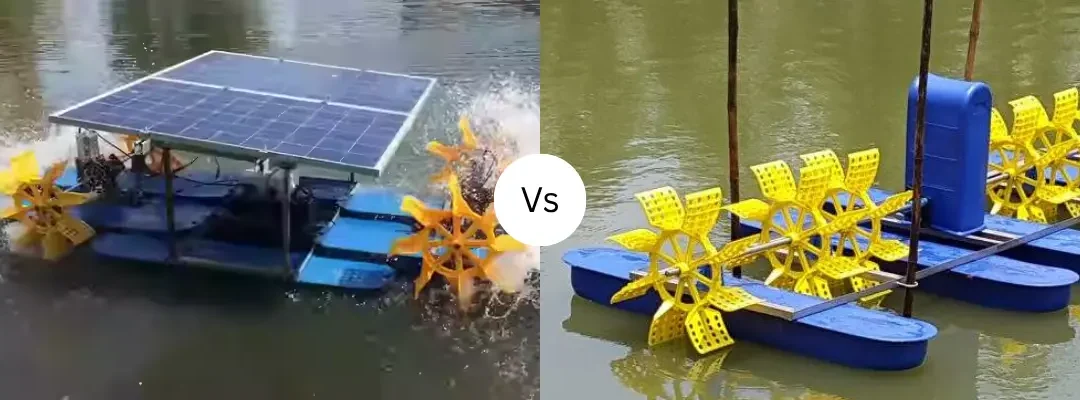
Solar Paddle Wheel Aerator and Electric Paddle Wheel Aerator are both used widely in aquaculture to improve dissolved oxygen levels in ponds. Here’s a detailed comparison to help you choose the right aerator for your fish or shrimp farm:
Solar Paddle Wheel Aerator
Pros:
- Energy Independent: Operates using solar power, reducing reliance on grid electricity.
- Eco-Friendly: Clean, renewable energy source with zero emissions.
- Low Operating Cost: No recurring electricity bills; great long-term savings.
- Ideal for Remote Areas: Perfect for off-grid or rural fish/shrimp farms.
Cons:
- Higher Initial Cost: Requires investment in solar panels, controller, and battery system.
- Weather Dependent: Performance may reduce on cloudy or rainy days.
- Battery Maintenance: Batteries need periodic replacement and monitoring.
Electric Paddle Wheel Aerator
Pros:
- Stable Power Supply: Consistent performance with continuous aeration, ideal for intensive farming.
- Lower Upfront Cost: More affordable initially compared to solar systems.
- Readily Available Components: Easier to maintain and source parts.
Cons:
- Electricity Cost: Monthly power bills can add up, especially in large operations.
- Power Outage Risk: Dependence on grid power means interruptions during outages.
- Less Eco-Friendly: Draws energy from fossil fuel sources unless paired with solar backup.
Best Use Scenarios
| Scenario | Recommended Aerator |
|---|---|
| Off-grid or rural pond | Solar Paddle Wheel Aerator |
| Intensive aquaculture | Electric Paddle Wheel Aerator |
| Eco-conscious farming | Solar Aerator |
| Budget-friendly setup | Electric Aerator |
Choose Solar Paddle Wheel Aerators if you're aiming for sustainability and energy savings in remote locations. Opt for Electric Paddle Wheel Aerators if you need consistent performance and have easy access to grid power.
Recent Comments